
Wedding table settings work best when the flatware fits both the visual brief and the meal. For a romantic garden reception, compare silver-tone and warm gold-tone samples with the actual linen, plates and flowers. Then confirm the piece list, dimensions, finish care, replacement plan and delivery date before approving a bulk purchase or rental allocation.
This guide is for wedding planners, event rental companies, hotel banquet teams and tableware buyers. It turns growing interest in layered, nature-inspired wedding decor into a practical flatware specification. Styling suggestions are proposals for a mockup; they are not evidence of a completed client project or a promise of product performance.
Use wedding table settings trends as a starting point, then test the details
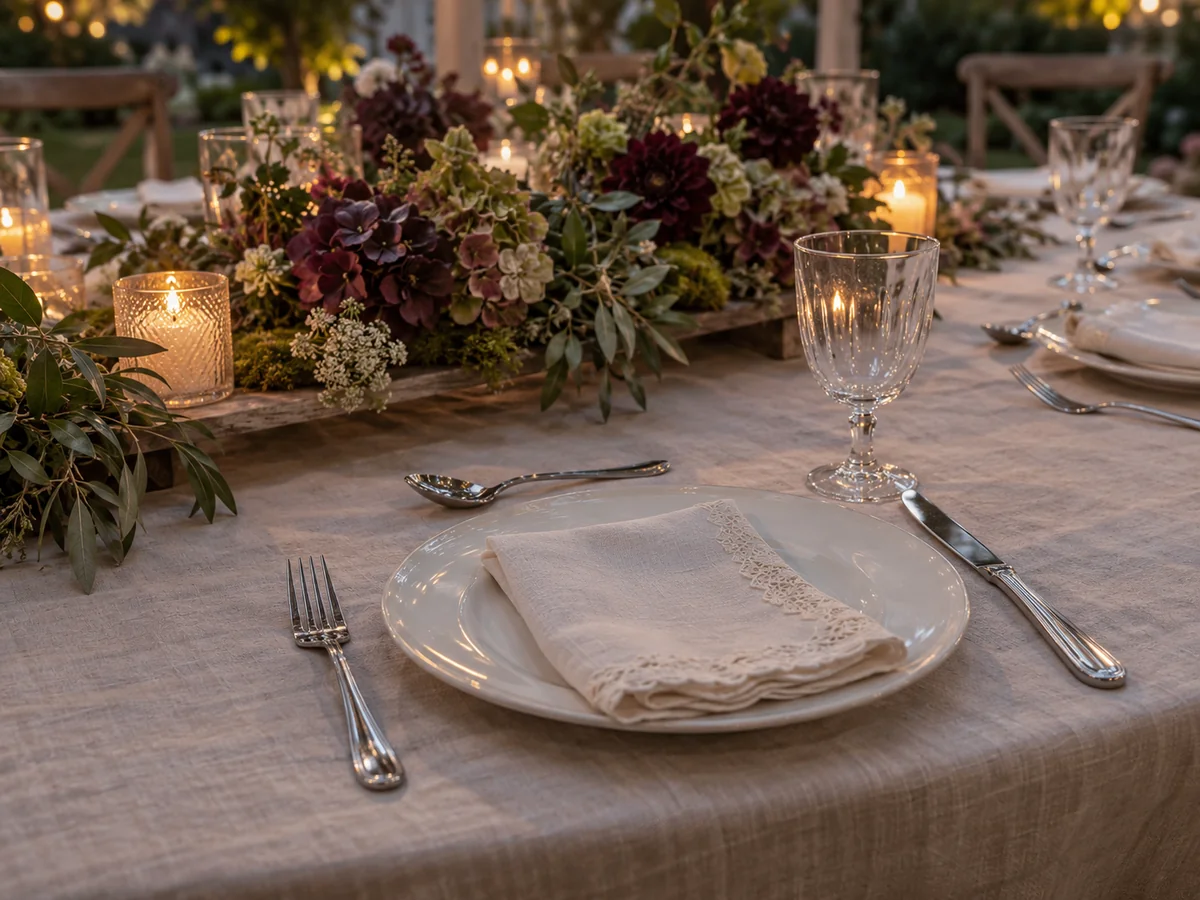
Pinterest's Wedding Trends Report 2026, published April 28, identifies interest in layered fabrics and nature-inspired decor. Its reported rising searches include lace napkin, moss tablescape and plum and olive wedding. These are useful inspiration signals for a reception assortment, not U.S. Google monthly search volumes or proof that a specific flatware color will sell.
Separate the scene from the product decision. Lace may influence the handle detail; an olive-and-plum palette may suggest comparing warm and cool metal finishes. Neither choice determines the steel grade, the number of pieces per guest or whether the finish suits the venue's cleaning process.
Give the sample team a short visual brief: venue, linen color, plate size, centerpiece footprint and lighting. Include two or three representative references instead of a folder of unrelated photographs. The objective is a repeatable setting a service team can assemble, clear and reset.
Compare silver-tone and gold-tone flatware against the real palette
Start with finish samples from the actual pattern being considered. A silver-tone beaded handle and a gold-tone plain handle change two variables at once. Compare the same pattern in two finishes first, or compare two patterns in the same finish, so the reason for a preference stays clear.
| Reception direction | Flatware options to compare | Mockup question |
|---|---|---|
| Ivory linen with lace detail | Plain silver-tone versus a restrained decorative handle | Does the handle complement the lace or compete with it? |
| Plum, olive and low greenery | Silver-tone versus warm gold-tone in the same pattern | Which remains clear beside the darker colors? |
| Glasshouse or daylight garden | Mirror-polished versus satin silver-tone | How do reflections look from a seated position? |
| Candlelit, draped reception | Warm gold-tone versus bright silver-tone | Can guests see the eating surfaces and staff identify the pieces? |
Metallic descriptions such as champagne, brushed gold and antique gold do not define a consistent color across suppliers. Ask for a physical color reference and confirm how the treatment is applied. Approve knives, forks and spoons together because differently shaped surfaces can reflect light differently even within one set.
A decorative handle also needs a functional review. Check the edge transitions, comfort in the hand and areas that will need cleaning. Use the flatware finish guide to separate visual choices from material and care specifications.
Check the setting from the guest's position
Build a mockup with two adjacent seats, not just a single styled plate. Include the menu card, favors, water glass and any wine glasses actually planned. Sit down, lift a fork and reach for the water glass while another person passes a plate or serving dish.
That rehearsal often makes a useful distinction between a photographic arrangement and a working reception table. Tall decor can obscure sightlines, an oversized napkin can cover a fork, and a crowded place setting can force staff to move items during service. Resolve those details before ordering a larger decorative pattern simply because it fills a mood-board photograph.
For a moss tablescape, keep the moss or other loose decorative material contained and separated from eating utensils. Check the florist's footprint, the catering team's setup route and how staff will replace a dropped piece. If outdoor service is planned, include covers, staging space and the venue's cleaning procedures in the operations brief.
Translate the menu into a flatware piece list
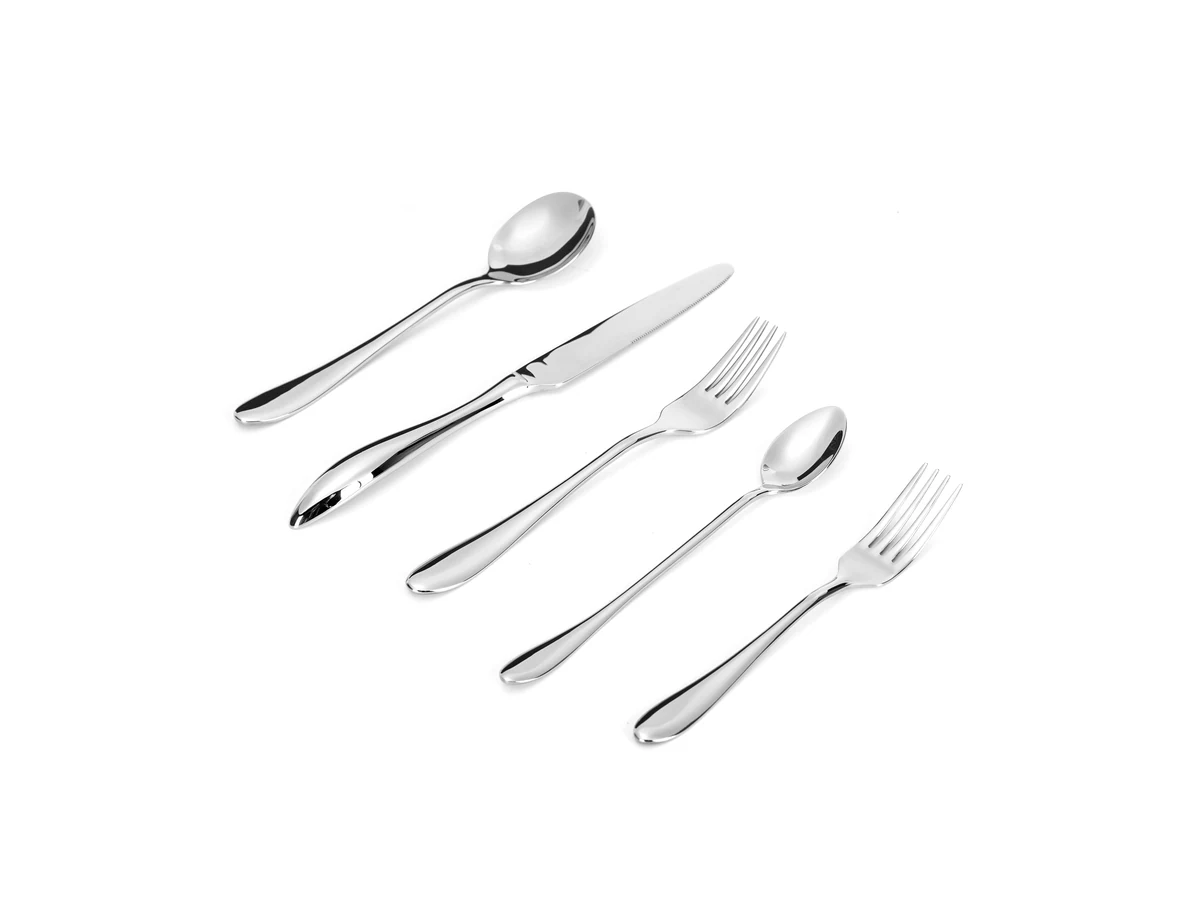
Begin with the service sequence. A seated three-course dinner may need a separate starter fork, dinner fork, dinner knife and dessert utensil. A buffet followed by a cake station may distribute those pieces differently, so copying a formal setting diagram can create unnecessary stock or missing pieces.
The Emily Post Institute's table-setting guides explain place settings by service format. Use them as a layout reference, then make the catering team's menu and clearing plan the basis of the order. Ask whether dessert flatware will be preset, brought with dessert or supplied at a separate station.
| Item | Assumed use | Base quantity | Approval point |
|---|---|---|---|
| Starter fork | One per guest, cleared after starter | 120 pieces | Matches the starter plate and portion |
| Dinner fork | One per guest for the main | 120 pieces | Comfort, tine finishing and pattern match |
| Dinner knife | One per guest for the main | 120 pieces | Function for the menu, not appearance alone |
| Dessert fork | One per guest, delivered with dessert | 120 pieces | Separate tray and service allocation |
| Teaspoon | Only for 60 planned hot-drink services | 60 pieces | Count based on beverage plan, not every seat |
This example totals 540 pieces before reserves and excludes serving utensils, staff meals and additional stations. If the planner chooses a 10% reserve for the four items used by all 120 guests, each becomes 132 pieces. A 10% reserve for 60 teaspoons becomes 66, bringing this illustrative order to 594 pieces before any pack-size rounding.
The 10% figure demonstrates a calculation, not a measured loss allowance. A rental company may use a different allocation based on breakage, collection and washing operations. A hotel that must support another simultaneous function needs to count that demand separately rather than borrowing the same clean stock twice.
Decide between rental and bulk purchase using total event work
For one reception, compare a rental proposal with the complete cost and work of ownership. For a venue or rental operator serving repeated events, compare the pattern's replacement availability, individual-item ordering and storage requirements. A lower piece price does not automatically make purchase the less expensive operational choice.
| Decision | Rental check | Purchase check |
|---|---|---|
| Availability | Is the exact pattern reserved for the date? | Is inventory available or must it be manufactured? |
| Quantity | What is the shortage and replacement process? | Can each item be reordered separately? |
| Handling | What sorting and return conditions apply? | Who washes, inspects and stores it afterward? |
| Finish | Will supplied batches match the approved sample? | How will later production be matched? |
| Delivery | When are drop-off and collection scheduled? | What are production, transport and receiving dates? |
Request like-for-like quotations. Include packing, delivery, collection where applicable, potential losses and the work required after the event. For a bulk buying program, use the flatware quotation comparison guide to keep product specifications and commercial terms aligned.
Freeze the flatware specification before the visual brief changes
A finish approved early can become unsuitable if the linen or plate is changed later. Record which table components were used for approval and require a new assembled review after a meaningful change. This is especially useful when a planner, stylist, rental company and catering team each approve a different part of the table.
- Pattern and item code for every fork, knife and spoon.
- Material specification per item, including the knife blade where different.
- Dimensions, unit weight and agreed tolerances.
- Finish treatment, approved color reference and care conditions.
- Menu, service sequence and exact quantities by item.
- Logo position and size if branding is requested.
- Protective packaging, pack counts and carton labels.
- Sample reference, approval date and required arrival date.
For colored finishes, ask the supplier which documents and checks apply to that exact construction. Do not assume a report for plain silver-tone flatware covers every coating or handle treatment. Review the food-contact documentation guide when writing the document request, and confirm applicable requirements for the destination market.
Customization can also change timing and minimum quantities. Request a project-specific response for a new handle, logo, finish or retail pack. An advertised range of designs does not establish immediate stock, a universal MOQ or a guaranteed event delivery date.
Questions planners and buyers ask
Does gold flatware always suit a romantic wedding?
No. Test it against the complete palette and lighting. Silver-tone flatware can support lace, plum, olive and other romantic table details without adding another warm accent. Approve the actual finish sample rather than treating a style label as a fixed rule, especially when several suppliers contribute metallic items.
Can different handle patterns be mixed on one table?
They can be mixed intentionally, but specify the combination per item and seat. Review a complete mockup to check scale and finish consistency. For venues that need fast resets and predictable replacement stock, fewer patterns may be easier to manage than a visually mixed assortment.
How much flatware is needed for a 120-guest wedding?
It depends on the menu and service sequence. The plated example in this guide uses 540 pieces before reserves or pack rounding. Calculate each item separately, including dessert and hot-drink service. Then add an operational reserve based on the event and supplier arrangement, not a universal per-guest multiplier.
What should be approved before placing a custom order?
Approve the full piece list, physical pattern and finish samples, logo where relevant, protective pack and shipping labels. Keep the dimensions and material specification in writing. Confirm MOQ, bulk production time and the delivery plan for that exact specification before paying against an event deadline.
Make the styled table repeatable
Wedding table settings become easier to buy when the inspiration is translated into named pieces, physical finish references and a service plan. Keep the mood board, but approve a usable table and a clear order sheet. Those two records help the visual result survive purchasing, packing and event-day setup.
For a venue, rental or private-label assortment, send Jieyang Hongsheng Hardware Products Co., Ltd. the proposed setting, item quantities, finish references and required arrival date. The team can review available specifications and customization requirements before sampling. Browse the flatware collection or send a project brief to start that review.