
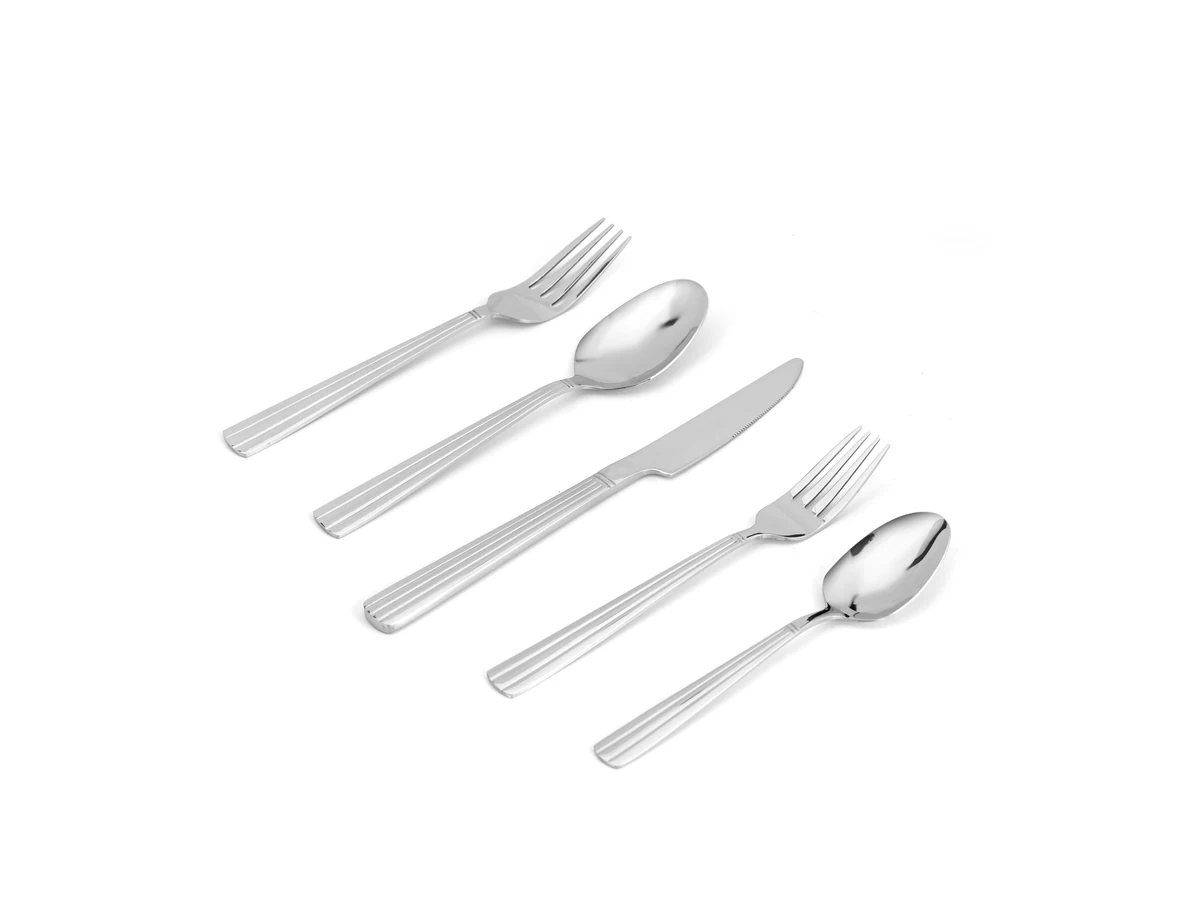
Buyers describe texture as a finish. In production it is geometry: ridges, dimples and grooves formed into the metal itself. That distinction explains most of the surprises in this category — a texture that looks identical in two photographs can feel completely different in the hand, and can wear differently after a year of commercial washing.
This guide covers the three common ways texture is formed, why consistency drifts between production lots, and what to inspect. The reference range is our textured handle flatware collection. For the surface finish comparison — mirror, satin, hammered and two-tone as polish categories — see our flatware finishes compared.
Texture Is Geometry, Not Just Finish
A satin finish changes how light scatters from a surface. A texture changes the surface itself. That matters because texture affects three things finish does not: grip when wet, perceived weight in the hand, and the way soil sits in the recesses during washing. It also affects how the piece wears — a raised ridge polishes down over time, while a groove keeps its shadow.
Three Ways Texture Is Formed
Each method leaves a different signature on the product and on the quotation.
| Method | How it works | Character | Cost driver |
|---|---|---|---|
| Die embossing | Texture cut into the forming die; transferred during pressing | Repeatable, uniform, crisp ridges or ribs | Die cost; die maintenance as detail wears |
| Mechanical hammering | Hand or machine hammering of the formed blank | Irregular dimples, artisanal variation | Labour; variation is inherent |
| Milling or cutting | Grooves cut or milled into the surface after forming | Deep, precise channels with sharp definition | Machine time; edge finishing inside grooves |
A common hybrid is a die-formed base texture that is then hand-detailed in selected areas. It reads as hand-worked while keeping most of the repeatability of a die, and it usually lands between the two cost levels.
Keeping Texture Consistent Across a Lot
Die-formed texture drifts in one direction over a production run: the die detail polishes away gradually, so the last pieces in a run can show shallower ridges than the first. Mechanical hammering drifts differently — each operator's rhythm produces a slightly different density. Both are manageable if they are measured rather than assumed, which is why a texture specification needs a physical reference sample and a simple comparison method, not a verbal description.
Grip, Weight and the Hand
Texture is often chosen for grip, particularly in hospitality where hands are wet and plates are heavy. Two variables decide whether it delivers: ridge height and ridge direction. Ridges running across the handle resist slip along the axis of a knife; ridges running lengthwise resist rotation. Very fine texture improves grip only marginally while making the piece harder to clean.
Wear and Cleaning in Commercial Use
In commercial dishwashing, raised texture is gradually polished down by abrasion and detergent, and recessed texture collects mineral film if drying is poor. Neither is a defect, but both are predictable and should be briefed. For general care guidance, see how to clean and polish stainless steel flatware.
Inspection Points for Textured Handles
- Ridge depth and pitch measured at three positions along the handle, compared to the reference sample.
- Texture continuity across the transition from handle to bolster — the most common place for texture to fade out.
- Edge condition on milled grooves: no burr, no polishing shadow.
- Hand feel under a wet grip, tested by the same person across the lot.
- Cleanliness after a wash cycle: no residue held in recesses.
These checks belong in the sample approval stage rather than in final inspection, because texture problems cannot be corrected after polishing without losing definition. The broader sample protocol is set out in flatware sample inspection checklist.
Our textured handle flatware is documented by forming method and texture depth per pattern, so a reorder can be matched to the approved reference rather than to a photograph that flattens the surface.