
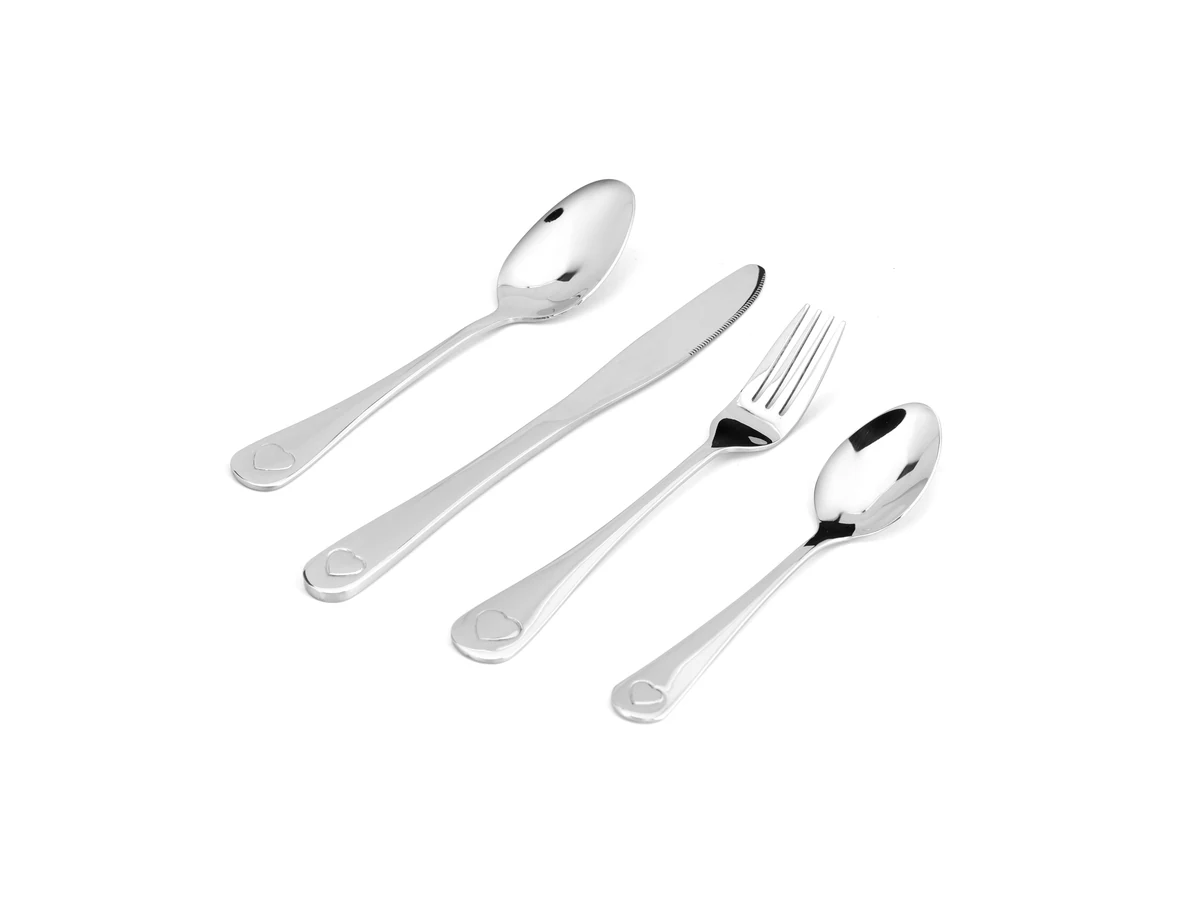
A custom flatware pattern is the most expensive thing a buyer will ever commission from a cutlery factory, and the one most easily lost. Tooling is paid for once; the pattern then sits on a shelf, in a drawing file and inside a set of dies — and nothing about that arrangement is confidential by default. This article covers what a buyer actually owns after a custom programme, what exclusive can reasonably mean, and the handful of written terms that decide whether the pattern stays yours or reappears in a competitor's catalogue eighteen months later.
In this article
- Why a pattern is a commercial asset, not just a drawing
- What exclusive has to mean: territory, channel and duration
- Who owns the drawing, the dies and the pattern
- Confidentiality before you send a drawing
- How a pattern ends up in a competitor range
- The terms worth writing into the agreement
- A protection checklist for a custom programme
- Frequently asked questions
Why a pattern is a commercial asset, not just a drawing
Flatware is a formed metal product, and the handle pattern is the part a customer recognises across a table. Two brands selling an 18/10 set at the same price point are separated by almost nothing except the shape in the hand: the same steel, the same gauge, the same polish, a different silhouette. That is why a pattern carries commercial value long after the tooling invoice is settled.
The value shows up in three places. The first is repeat sales: a customer who buys a six-piece setting often returns for serving pieces — and a pattern that has been discontinued cannot be extended. The second is retail identity, because a range that keeps its handle across seasons is recognisable on a shelf. The third is margin, since a differentiated pattern supports a price that a commodity shape cannot.
Two things follow from that, and they are the reason this subject deserves attention before tooling rather than after:
- A pattern is only as protected as its paperwork. Physical possession of a drawing file is not ownership, and a factory holding dies is not the same as a factory barred from using them.
- Protection is cheapest at the start. Terms negotiated before tooling starts are a paragraph in an agreement. The same terms sought two years later are a negotiation with an incumbent supplier and a launch date already committed.
Practical framing: treat the protection question as part of the tooling decision, not as a legal afterthought. The moment to ask who owns the dies is the moment you are quoted for them.
What exclusive has to mean: territory, channel and duration
Exclusivity is one of the most frequently requested and least precisely defined terms in flatware sourcing. A supplier who agrees to it in principle and a buyer who assumes it in principle can both be satisfied and still end up with a pattern on a competitor shelf, because exclusivity without a scope is not an obligation.
Three variables turn the word into something enforceable:
| Variable | Why it decides the value | What a workable version looks like |
|---|---|---|
| Territory | A pattern held in one market can be sold freely in another | Named countries or a named customs region, listed rather than implied |
| Channel | Retail, hospitality and distributor channels rarely compete directly | State whether protection covers retail, foodservice, e-commerce or promotional use |
| Duration | Protection tied to tooling life is easier to grant than protection in perpetuity | A defined period, or the life of an active supply arrangement with volume conditions |
The commercial logic matters here. A pattern held exclusively in every market, in every channel, forever is a significant restriction on a manufacturer — and it is priced accordingly or refused. A pattern held for two named markets in the retail channel for the life of the tooling is a much smaller ask and is far more likely to be granted without inflating the unit price.
Who owns the drawing, the dies and the pattern
Ownership in a custom flatware programme splits into three separate things that are often discussed as one. Separating them is the single most useful thing a buyer can do before signing.
- The drawing and the design file. Who created it, who holds the editable master, and whether the file is released to the buyer at the end of the programme or only used to make the tooling.
- The tooling itself. Dies, forming tools and any decoration stamps. Ownership is a contractual matter: if the buyer paid for tooling, the normal expectation is written confirmation that the tools are dedicated to that product and retained for the buyer's use.
- The pattern as a market right. The right to sell the shape, in a stated territory and channel, for a stated period. This is a commercial right rather than a property right, and it is the one that determines whether a competitor can appear with the same silhouette.
Getting all three in writing is not an adversarial act. A factory that has invested in dies wants to know they will be used; a buyer who has paid for development wants to know they will not be used elsewhere. Both questions have answers, and the answers belong in the agreement rather than in a recollection of a conversation at a trade fair.
Confidentiality before you send a drawing
The awkward part of protecting a design is that protection has to begin before the design is shared — and sharing is exactly what a quotation requires. A buyer who sends a technical drawing with an enquiry has already disclosed the pattern; a buyer who sends a one-line brief under a confidentiality agreement has not.
In practice the sequence that protects both sides is short:
- Agree confidentiality first, then disclose. A non-disclosure agreement signed before drawings are exchanged is worth considerably more than the same document signed after an order is placed.
- Define what is confidential. Drawings, dimensions, artwork, target markets and volumes are the usual list. A clause that protects only the drawing often leaves the commercial plan unprotected.
- Decide the term and the carve-outs. Confidentiality for a defined period, with an exception for information that is already public, is normal and easier to agree than an open-ended obligation.
- Keep the reference material traceable. Sending drawings by email with no version number makes it impossible later to prove which drawing was disclosed and when.
Note on scope: a confidentiality agreement stops disclosure. It does not by itself stop a factory from manufacturing the same shape for someone else. That protection comes from the exclusivity and tooling terms described above.
How a pattern ends up in a competitor range
When a custom pattern appears in a competing catalogue, the cause is rarely a dramatic breach. It is usually one of four ordinary situations — and each has a different remedy.
| Route | What actually happened | What prevents it |
|---|---|---|
| No exclusivity was agreed | The pattern was developed for one buyer but never reserved to them | A written scope of territory, channel and duration |
| Tooling ownership was left open | Dies paid for by the buyer were treated as the factory standard equipment | Dedicated tools, documented as such, retained for the buyer |
| The pattern sat unused | After a gap in orders the shape was offered to a buyer who asked for something similar | A minimum activity or retention term, so silence has a defined consequence |
| A near copy rather than a copy | A similar silhouette was developed independently, which is legal in most markets | Registered design protection where the market allows it, plus a genuinely distinctive pattern |
The fourth row deserves honesty. A handle shape is not automatically protected by law, and a slightly different contour may be entirely lawful. Where a pattern is central to a brand, the answer is a combination: a sufficiently distinctive design, registered design protection in the relevant markets where available, and a supply agreement that makes the commercial version of the same promise.
The terms worth writing into the agreement
Six clauses cover most of the risk in a custom flatware programme, — none of them is unusual or difficult to obtain from a factory that expects to build a long relationship.
- Tooling ownership and dedication. Who paid, who holds, and confirmation that the tools are not used for other customers.
- Retention. How long the dies and the sealed reference sample are kept, and what happens if the buyer pauses ordering for a season.
- Exclusivity scope. Territory, channel and duration, written as named items rather than as an adjective.
- Confidentiality. Agreed before disclosure, with a defined term and a defined list of what is confidential.
- Portability. Whether the tooling can be transferred to another manufacturer, and under what conditions, which is the clause buyers think about last and need most.
- End-of-relationship terms. What is returned, what is retained and what continues to apply after the last shipment.
Developing a pattern you intend to keep?
We develop handles, tooling and samples in-house at our Jieyang facility, and we quote custom programmes with the tooling and ownership terms stated up front so they can be agreed before dies are cut.
A protection checklist for a custom programme
| Stage | Action | Evidence to keep |
|---|---|---|
| Before disclosure | Sign confidentiality terms before sending drawings or artwork | Signed agreement, dated |
| At quotation | Ask for tooling cost, ownership and retention to be stated together | Written quotation with the tooling terms named |
| Before tooling starts | Confirm exclusivity scope in writing | Named territory, channel and duration |
| At approval | Seal two reference samples and record the approved drawing version | Both samples, numbered drawing |
| Ongoing | Record what retires a pattern and what keeps protection alive | Retention or minimum activity terms |
Frequently asked questions
If I pay for the tooling, do I own it?
Ownership is a contractual matter rather than an automatic consequence of payment. If a buyer funds tooling and design development, the reasonable expectation is written confirmation that the tools are dedicated to that product and retained for the buyer's use – which is exactly the kind of statement worth obtaining before dies are cut rather than afterwards.
What does exclusive actually cover?
Whatever the agreement says, which is why the word needs a scope. In practice protection is defined by territory, by sales channel and by duration. A pattern held for named markets in the retail channel for the life of the tooling is a specific, grantable commitment; protection in every market, in every channel, indefinitely is a much larger restriction and will be priced or refused accordingly.
Can I change factory later and take the pattern with me?
That depends on portability, which is a separate clause from ownership. Moving a pattern means either transferring the dies or cutting new ones from the drawings, and both need to have been anticipated. Buyers who intend to source competitively over time should confirm, before tooling starts, that the drawings are complete enough to re-cut from and that the tools can be transferred on request.
Is a handle shape protected by law?
Not automatically, and not in every market. A sufficiently distinctive shape can attract registered design protection where that route is available, and a brand name or logo on the handle can be protected as a trademark, but a slightly different contour produced independently may be entirely lawful. Where the pattern carries real commercial value, the practical answer is a combination of design distinctiveness, registration where possible, and contract terms that cover the commercial relationship.
Should confidentiality be agreed before or after the quotation?
Before, because the quotation requires the drawing. A confidentiality agreement that is signed after an order is placed has already missed the moment when the pattern was disclosed, which is the disclosure it was meant to control. The practical sequence is to agree terms first, then send the technical file with a version number so that later discussions can refer to a specific drawing.
A custom flatware pattern is a long-lived asset, and the paperwork that protects it costs a fraction of the tooling it describes. Settling ownership, exclusivity and confidentiality before the first drawing leaves the building — is the cheapest insurance in the whole programme.