
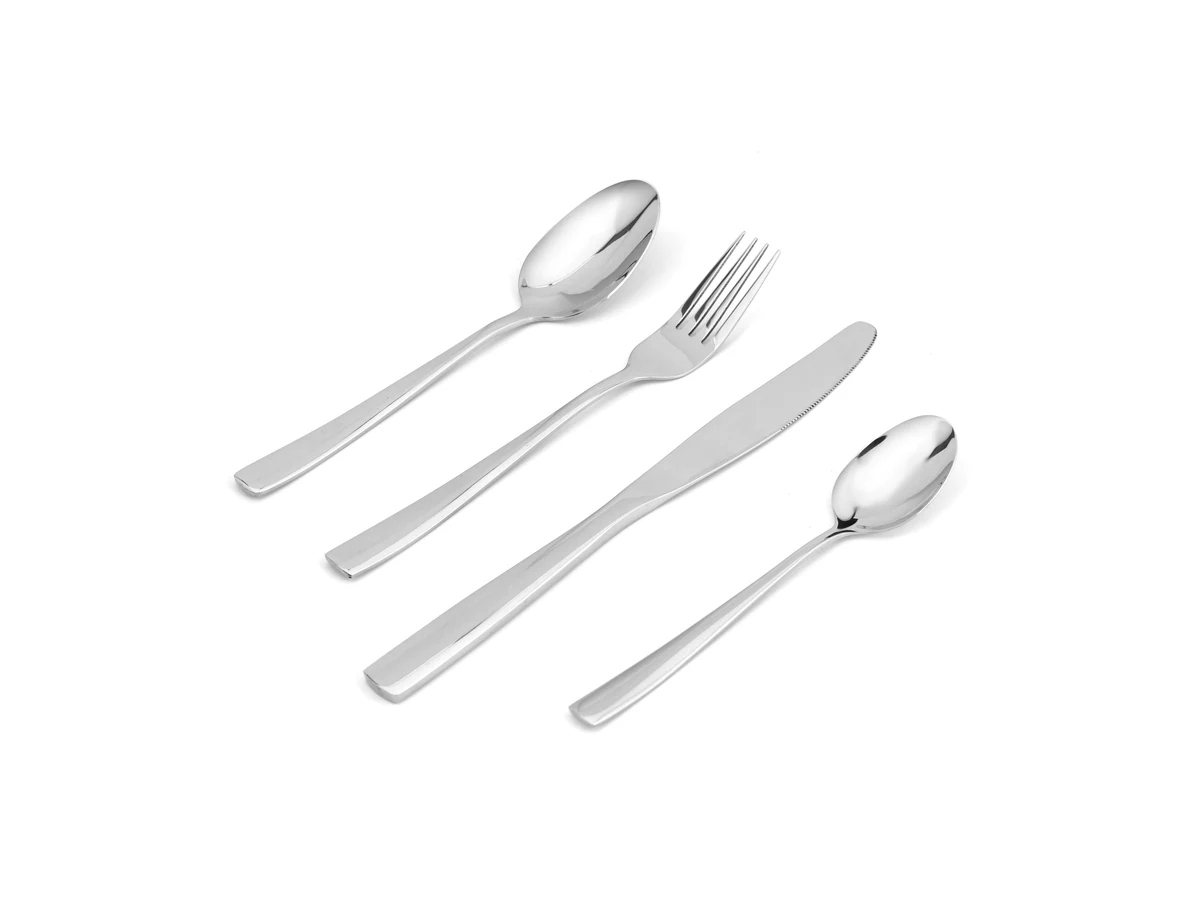
The choice between a modern and a classic flatware direction is usually presented as a matter of taste. In practice it is an operating decision: each direction carries different replacement risk, different pattern-matching exposure and a different cost profile. Buyers who compare them on appearance alone tend to change direction mid-program.
This comparison is written for importers, distributors and operators specifying a direction for a channel. The two reference ranges are our modern flatware designs and classic patterned flatware.
Two Directions, Different Operating Logic
A modern line is defined by profile: clean silhouettes, tapered or rounded handles, minimal ornament, often a satin or brushed finish. It matches easily, photographs well and does not date visibly. A classic line is defined by ornament: borders, relief or medallions that create identity and occasion. It is harder to match from another supplier, and that difficulty is the point when the pattern is proprietary.
| Factor | Modern | Classic |
|---|---|---|
| Matching from a second source | Easy — profile and finish are generic | Hard — pattern is specific |
| Replacement exposure | Low; a discontinued SKU can be substituted | High; a discontinued pattern is visible |
| Occasion signal | Restrained, contemporary | Formal, ceremonial, gifting |
| Tooling cost | Lower; simpler forms | Higher; ornament needs die detail |
| Perceived value at retail | Relies on finish quality and packaging | Relies partly on ornament |
A Five-Question Decision Test
- Does the venue or brand have an interior concept that a pattern can support — or does it change every few years?
- Is the buyer likely to reorder the same SKU for five years or more, or to re-tender annually?
- Is flatware displayed in photographs and at events, or used largely out of sight?
- Does the channel sell occasion (gift, registry, banquet) or utility (canteen, staff dining, contract supply)?
- Is there budget for ornament-specific tooling, and does the volume justify it?
Three or more answers pointing to stability, display and occasion favour a classic direction. Answers pointing to substitution, rapid change and volume efficiency favour a modern one.
Channel Fit: Hospitality, Retail, Private Label
Hospitality splits by outlet: fine dining and banquet tend toward patterned or heavy-gauge classic lines, while all-day dining and staff restaurants usually prefer modern profiles because they are replaced more often and matched more easily. Retail splits by price architecture: modern works in open-stock and add-on sales, classic works in boxed services and gifting. Private label splits by ambition — a brand building a recognisable tabletop identity needs a pattern it owns; a brand competing on price should not pay for tooling it cannot defend.
Replacement and Range Extension Risk
The hidden cost of a design direction is what happens when one SKU runs out. In a modern line, a replacement piece in a similar profile and finish is usually acceptable to the end user. In a classic line, a substitute is immediately visible next to the existing pieces — which means the operator must keep a stock reserve or accept visible mismatch. That reserve is a real working-capital cost and belongs in the procurement model.
Cost and Lead-Time Differences
Tooling is the main difference. A simple modern handle can often be produced from existing or lightly modified tooling; a patterned handle needs its own die, its own sampling round and a longer approval cycle. Per-piece cost then depends less on the direction and more on gauge, finish and piece allocation. A thin modern set and a thin classic set are close in cost once tooling is amortised — what changes is the up-front investment and the inventory discipline required.
When to Run Both Directions
Running both is sensible when a distributor serves two distinct channels and wants one supplier relationship. It is a mistake when both lines target the same shopper, because internally the two ranges will trade sales rather than grow the category. If you do run both, keep the finishes compatible so that a serving piece from one line can sit next to place settings from the other without looking like substitution.
Our modern flatware range and classic patterned range are documented with handle profile, gauge, finish and tooling ownership per pattern, which is the information needed to compare the two directions on cost rather than on impression.