
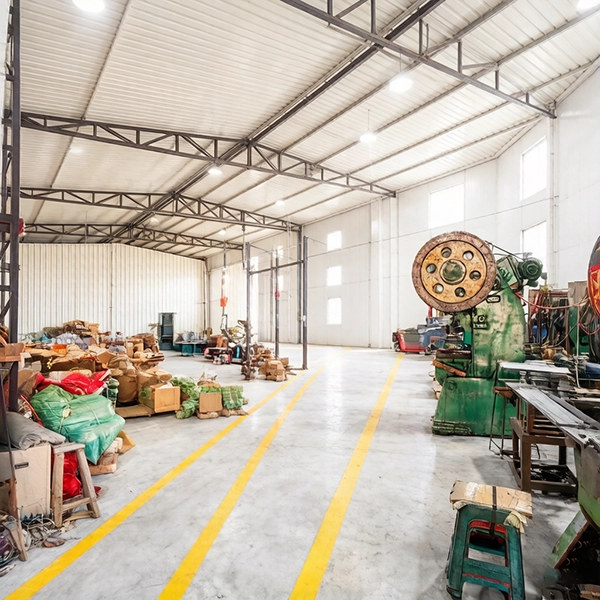
Verify Production Capability Before Comparing Prices
Not every factory that quotes flatware actually controls the full production process. A reliable flatware manufacturer should be able to explain which steps are completed in-house and which are subcontracted, especially for knife blades where a forged or hollow-handle construction may require separate tooling. Ask whether the factory cuts, forms, polishes and packages the utensils itself, and request a process flow for the exact pattern you plan to buy.
- Confirm the legal entity that signs the contract and receives payment.
- Ask which processes are in-house and which rely on outside suppliers.
- Request past samples in the same material grade and finish you require.
- Check the inspection criteria and reporting format the factory uses.
Control the Specification by SKU
Vague terms like "good quality" do not survive a container shipment. Convert every expectation into a measurable value. For each knife, fork and spoon, record the material grade, overall length, target weight, thickness, finish, and the acceptable tolerance. Stainless steel flatware often uses different construction for knife blades than for the forged or stamped fork and spoon heads, so the material must be specified per piece rather than for the set as a whole.
| Field | What to record |
|---|---|
| Piece list | Item codes, names, and quantity by piece |
| Material | Declared grade for each component, including knife blade |
| Dimensions | Overall length, width, thickness and target weight |
| Finish | Mirror, satin, textured or color reference with acceptable variation |
| Branding | Logo method, artwork, size and position |
| Workmanship | Edge condition, fork-tine alignment, polish, scratches and deformation limits |
Approve Samples in Stages
Sample approval should never be a single step. Start with a reference sample to communicate design direction, then a development sample that checks dimensions, weight and finish against the specification. The final approval sample is the signed reference that production must match, and it should be sealed and retained. Reconfirm any change after approval, including artwork, coating color or carton count.
Confirm Quality Control and Inspection
A qualified flatware manufacturer provides an order-specific inspection plan rather than a generic promise. Review how the factory checks handle outline, left-right symmetry, edge smoothness, fork-tine spacing and polish consistency, and confirm whether a third-party inspection before shipment is supported. Packaging checks should cover piece count, carton marks and protection of polished surfaces.
Common Sourcing Mistakes
- Choosing the lowest quotation before aligning material, weight and packaging.
- Assuming every utensil in a set uses the same stainless steel grade.
- Approving a finish from a screen instead of a sealed physical sample.
- Planning launch timing from production days alone, ignoring sample, transit and customs time.
FAQ
Should I buy flatware directly from a factory or a trading company?
Direct purchasing can improve technical communication, but it does not guarantee better control. Evaluate the actual production role, quality system and communication, regardless of the commercial channel.
What is a normal MOQ for custom flatware?
There is no universal number. MOQ depends on the existing pattern, steel grade, finish, logo process and packaging. Confirm it for the final specification.
How long does OEM flatware production take?
Mass-production timing begins only after the deposit, approved sample, final artwork and packaging information are confirmed. Sample time and bulk lead time should be quoted separately.