
What the Numbers Mean
Stainless steel flatware grades are often labeled with two numbers, such as 18/10 or 18/0. The first number is the percentage of chromium, and the second is the percentage of nickel. Chromium provides corrosion resistance and forms the protective surface, while nickel adds luster, formability and additional resistance to acids found in food. An 18/10 grade contains approximately 18% chromium and 10% nickel; 18/0 contains 18% chromium and no significant nickel.
18/10 vs 18/0 in Practice
| Attribute | 18/10 | 18/0 |
|---|---|---|
| Nickel content | About 10% | Negligible |
| Corrosion resistance | Higher | Good but lower |
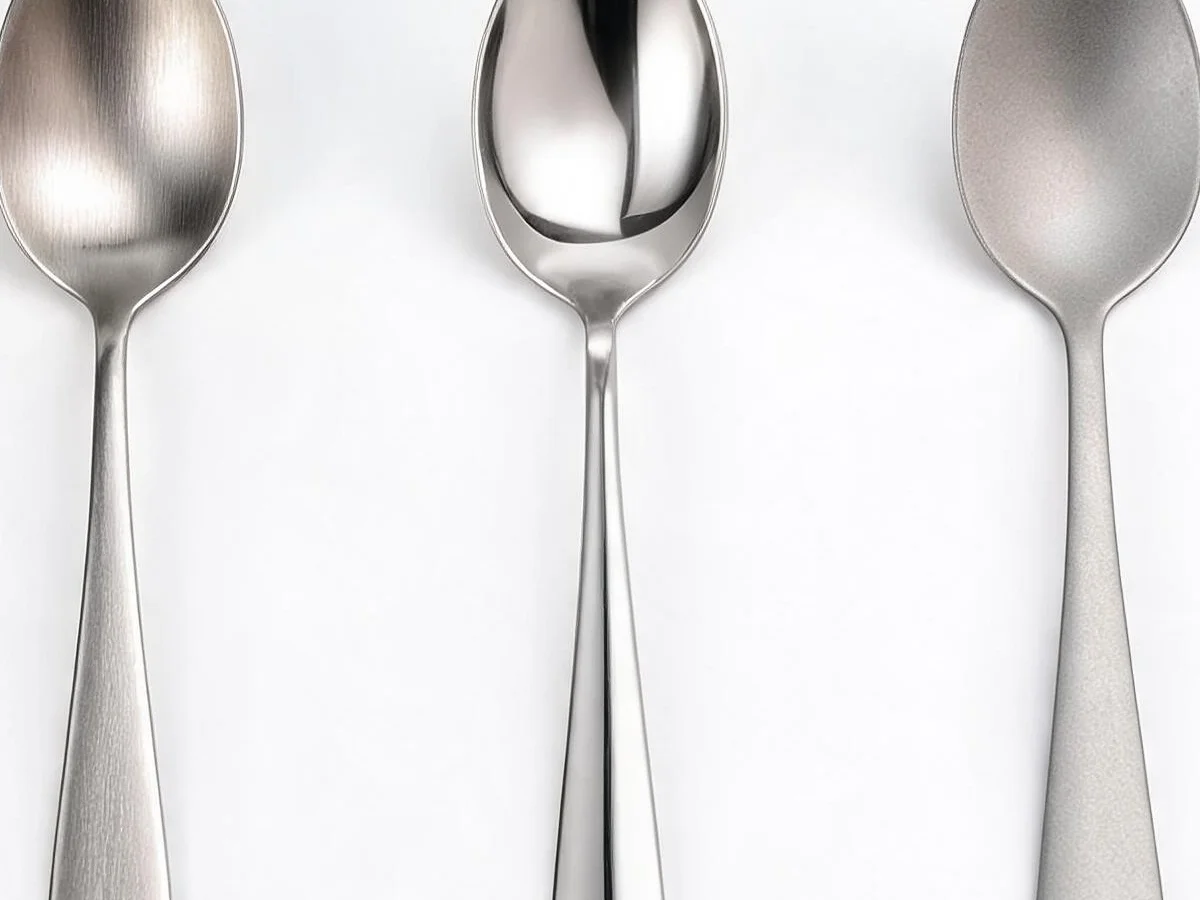
| Luster | Brighter, holds shine longer | Slightly less bright |
| Cost | Higher | More economical |
18/0 is a common choice for budget and food-service flatware where cost matters and the pieces are replaced frequently. 18/10 is favored for retail sets and hospitality programs where appearance and longer life justify the higher price.
Myths and Misconceptions
Higher nickel does not make flatware "safer" in a food-contact sense; both 18/10 and 18/0 food-grade stainless steels are widely used. The difference is mostly durability, appearance and cost. Also, 18/0 is still magnetic-compatible while 18/10 is less magnetic, which matters for some commercial dishwasher or retrieval systems.
How to Choose
For hospitality and gift sets, 18/10 often provides the best balance of appearance and longevity. For high-volume, high-replacement or budget-conscious programs, 18/0 can be the more economical choice. Always confirm the exact grade per component, because knife blades are frequently constructed from a different material than fork and spoon heads.
FAQ
Is 18/10 flatware worth the extra cost?
For applications where appearance and service life matter, 18/10 often justifies the premium. For disposability-oriented programs, 18/0 may be sufficient.
How can I verify the grade a supplier claims?
Request a mill certificate or material test report, and specify the grade per component in the purchase agreement rather than relying on the set label alone.